Presented at the NC Biotech Life Sciences Marketing Group · October 14, 2025
By the Numbers
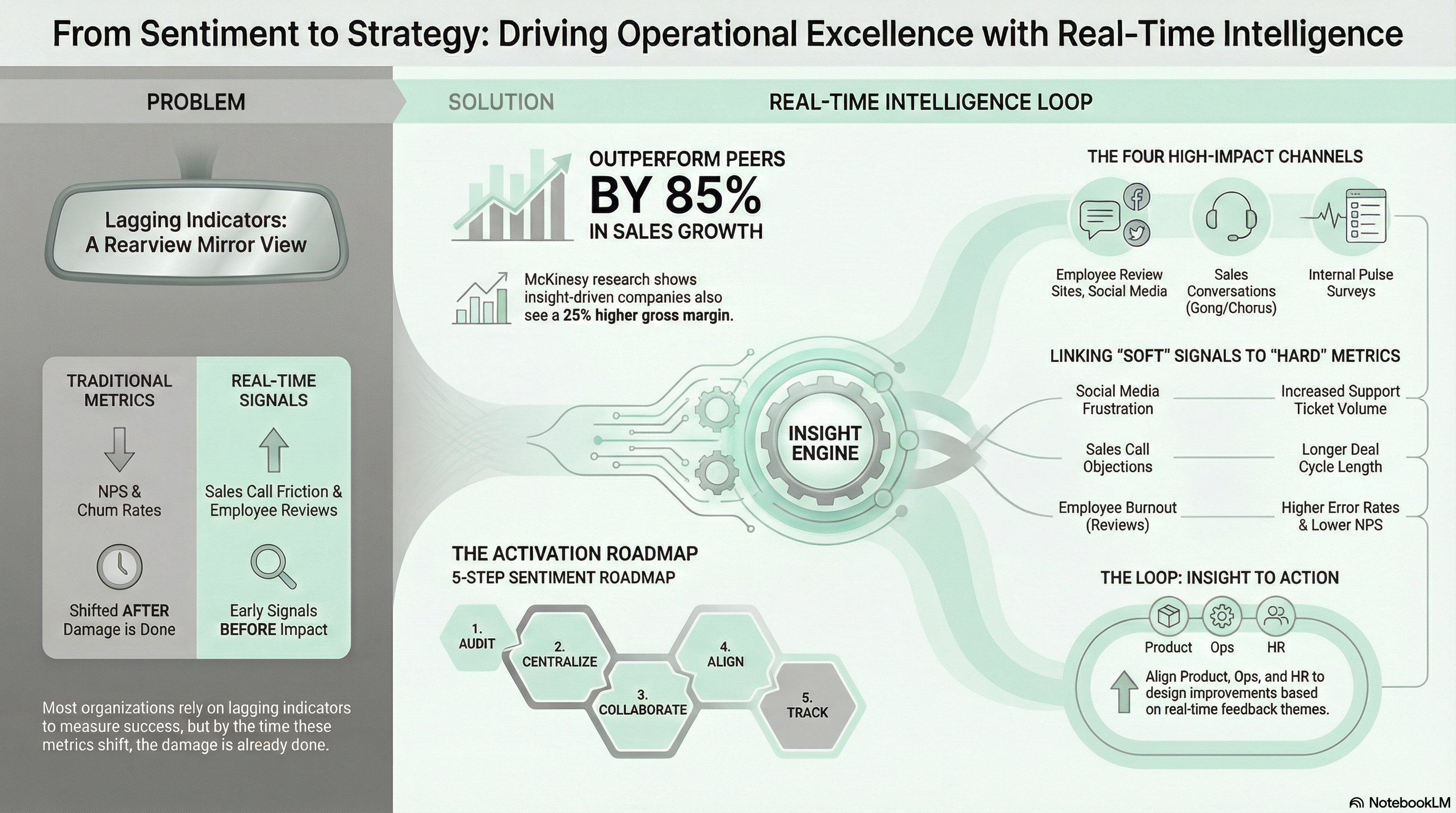
- Companies that use real-time intelligence outperform peers by 85% in sales growth (McKinsey)
- Insight-driven organizations see a 25% higher gross margin than competitors relying on lagging metrics (McKinsey)
- Most organizations don't act on customer signals until after damage to revenue or retention is already done
Most organizations measure success in the rearview mirror. NPS scores. Churn rates. Quarterly revenue. These metrics tell you what happened — not what's about to happen. And in fast-moving B2B markets, by the time the data confirms a problem, you've already lost the deal, the customer, or the quarter.
This is the gap that real-time digital marketing intelligence closes. Not by replacing traditional metrics, but by layering in the early signals that show you where things are heading before impact hits.
The Problem: Lagging Indicators Are a Rearview Mirror
Traditional marketing and operations metrics are valuable — but they're trailing indicators. NPS surveys go out after the experience. Churn rates reflect decisions already made. Revenue reports capture what closed, not what's at risk. By the time these metrics shift, the damage is done.
Real-time signals work differently. Sales call friction patterns, employee review trends, social media sentiment, and internal pulse surveys are early-warning systems. They surface problems — and opportunities — while there's still time to act.
When marketing meets operations, the goal isn't just to know what happened. It's to see what's coming and move first.
The Four High-Impact Intelligence Channels
Not all signals are created equal. The channels that consistently deliver the most actionable early intelligence for B2B organizations in healthcare, life sciences, and technology are:
- Employee Review Sites & Social Media — Glassdoor, LinkedIn, and industry forums surface cultural and operational friction before it shows up in attrition or customer experience scores.
- Sales Conversations (Gong, Chorus, and similar tools) — Patterns in objections, deal stall points, and competitor mentions reveal market positioning gaps in real time.
- Internal Pulse Surveys — Short, frequent employee surveys uncover burnout signals, alignment gaps, and morale trends weeks before they affect performance.
- Social Media Monitoring — Complaint trends, community sentiment, and share-of-voice shifts give early warning on product, service, and brand issues.
Linking "Soft" Signals to Hard Business Metrics
The skeptic's objection to sentiment data is always the same: "It's too subjective." But the data tells a different story. These soft signals map directly to the hard metrics that drive revenue and retention:
| Real-Time Signal | Hard Business Impact |
|---|---|
| Social Media Frustration | Increased Support Ticket Volume |
| Sales Call Objections | Longer Deal Cycle Length |
| Employee Burnout (Reviews) | Higher Error Rates & Lower NPS |
When you see these patterns emerging in real time, you have a window to intervene. Ignore them, and you'll see the impact in your pipeline, your retention rates, and your next quarterly review.
The Infographic: The Real-Time Intelligence Loop
The 5-Step Sentiment Activation Roadmap
Knowing that signals exist isn't enough — most organizations lack a systematic process for acting on them. Here is the five-step roadmap for turning sentiment into operational strategy:
- Audit — Inventory the data sources you already have. Where are sentiment signals currently being captured, and where are they being ignored?
- Centralize — Bring signals into a single view. Fragmented data across tools, departments, and platforms kills the ability to see patterns early.
- Collaborate — Break down the silos between marketing, sales, operations, product, and HR. Sentiment data only becomes actionable when the right people see it together.
- Align — Connect insights to decisions. Each signal should have a clear owner and a defined response protocol before a problem escalates.
- Track — Measure the impact of your interventions. Did the response to the early signal prevent the downstream outcome? Closing this loop turns reactive organizations into proactive ones.
What This Means for Life Sciences and Healthcare Organizations
In regulated industries, the stakes of getting this wrong are higher. A sentiment signal that goes unaddressed in a pharmaceutical commercial operation can mean lost formulary position. In a health system, it can mean patient experience failures that surface in CMS ratings months later. In a medical device company, it can mean sales rep attrition that creates territory coverage gaps you won't fully recover from for a year.
The organizations winning in these markets aren't just the ones with the best products. They're the ones with the fastest feedback loops — between what the market is telling them and how their operations respond.
The Insight Engine isn't a technology platform. It's a discipline: the organizational habit of connecting what you hear to what you do, before the window closes.
Where to Start
You don't need a six-figure analytics platform to begin. Start with what you have. Pull your last three months of Gong call recordings and look for objection patterns. Run a 5-question pulse survey with your team. Set up a basic social listening alert for your brand and your top competitors. Then ask: what is this data telling us, and who in our organization is responsible for acting on it?
That question — and the discipline to answer it consistently — is the beginning of operational intelligence.