Presented at the NC Biotech Life Sciences Marketing Group · October 14, 2025
Why Early Signals Matter
- McKinsey's research connects thoughtful use of customer data with stronger commercial decision-making (McKinsey, Capturing value from your customer data).
- Customer feedback becomes more useful when the people responsible for sales, service, and operations can act on it together.
- Earlier visibility gives leadership more time to address emerging issues affecting revenue, retention, or customer experience.
NPS scores, churn rates, and quarterly revenue tell you what has already happened. Customer feedback, sales conversations, and employee observations can surface a developing problem while there is still time to respond.
Real-time marketing intelligence adds those earlier signals to the metrics your organization already tracks. Together, they give leadership a more complete view of what may happen next.
The Problem: Lagging Indicators Are a Rearview Mirror
Traditional marketing and operations metrics are useful trailing indicators. NPS surveys follow the customer experience, churn rates reflect completed decisions, and revenue reports record closed business. Earlier signals help explain what may be developing beneath those numbers.
Real-time signals work differently. Sales call friction patterns, employee review trends, social media sentiment, and internal pulse surveys are early-warning systems. They surface problems, and opportunities, while there's still time to act.
When marketing and operations share what they are hearing, the organization can spot patterns and respond sooner.
The Four High-Impact Intelligence Channels
Useful early signals often come from a small set of familiar channels in healthcare, life sciences, and technology organizations:
- Employee reviews: Glassdoor and similar sources can reveal cultural and operational friction affecting retention or customer experience.
- Sales conversations: Recorded calls and sales notes surface patterns in objections, stalled deals, and competitor mentions.
- Internal pulse surveys: Short employee surveys help leaders recognize workload concerns, alignment gaps, and emerging morale issues.
- Social listening: Customer comments, community conversations, and brand mentions can identify service or reputation concerns.
Linking "Soft" Signals to Hard Business Metrics
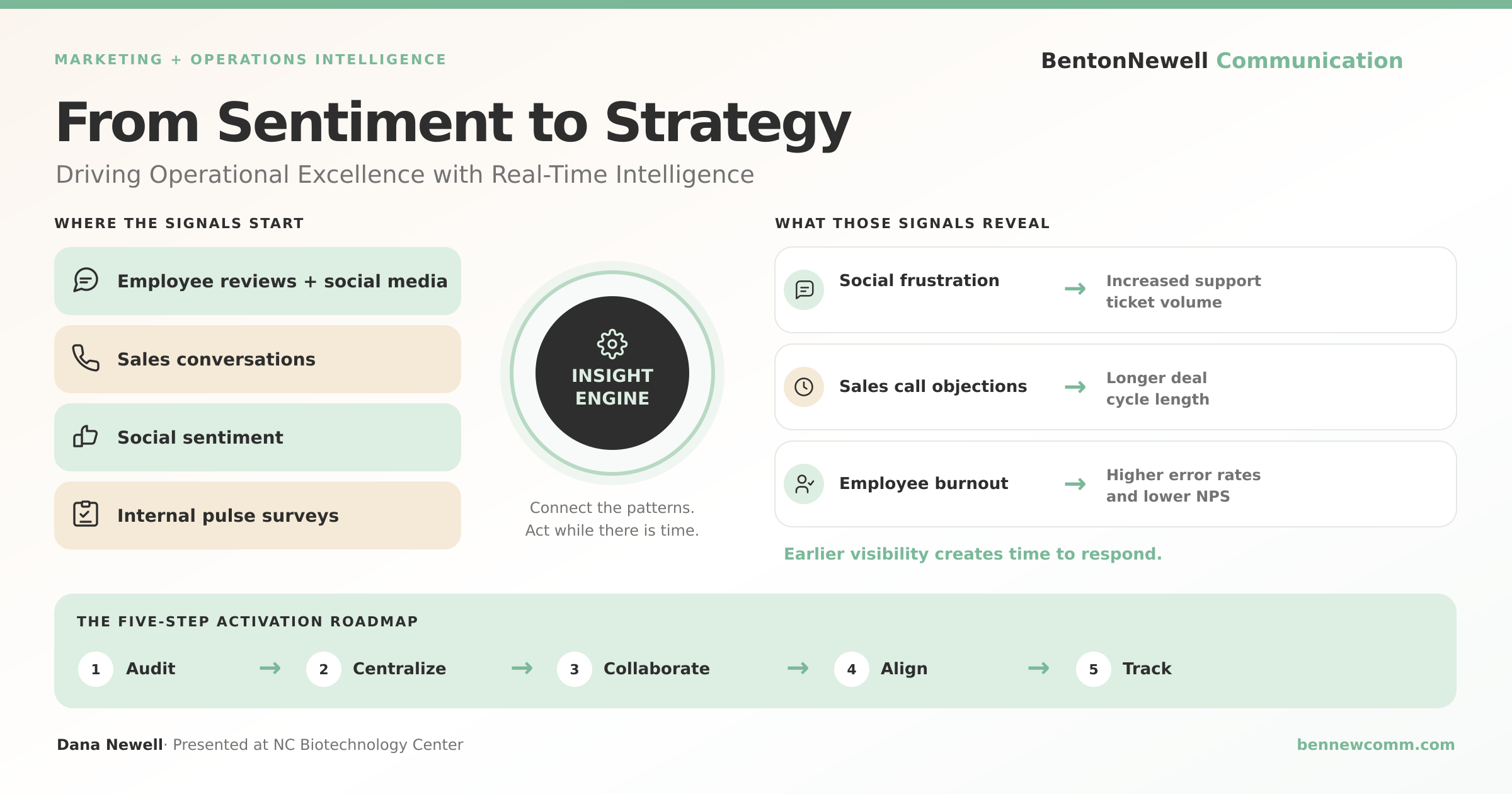
The skeptic's objection to sentiment data is always the same: "It's too subjective." But the data tells a different story. These soft signals map directly to the hard metrics that drive revenue and retention:
| Real-Time Signal | Hard Business Impact |
|---|---|
| Social Media Frustration | Increased Support Ticket Volume |
| Sales Call Objections | Longer Deal Cycle Length |
| Employee Burnout (Reviews) | Higher Error Rates & Lower NPS |
When you see these patterns emerging in real time, you have a window to intervene. Ignore them, and you'll see the impact in your pipeline, your retention rates, and your next quarterly review.
The Infographic: The Real-Time Intelligence Loop
The 5-Step Sentiment Activation Roadmap
Turning customer and employee feedback into action requires a consistent process. Here is a five-step approach for connecting those signals to operational decisions:
- Audit: Inventory the data sources you already have and identify which signals are being missed.
- Centralize: Bring relevant feedback into a shared view so patterns are easier to recognize.
- Collaborate: Give marketing, sales, operations, product, and HR a practical way to share what they are hearing.
- Align: Assign an owner and a response process to signals that require action.
- Track: Measure whether the response improved the customer experience, protected revenue, or resolved an operational issue.
What This Means for Life Sciences and Healthcare Organizations
In regulated industries, the stakes of getting this wrong are higher. A sentiment signal that goes unaddressed in a pharmaceutical commercial operation can mean lost formulary position. In a health system, it can mean patient experience failures that surface in CMS ratings months later. In a medical device company, it can mean sales rep attrition that creates territory coverage gaps you won't fully recover from for a year.
Organizations respond more effectively when customer feedback reaches the people responsible for operations, sales, and service delivery. A shorter feedback loop gives those teams more time to address issues.
The real discipline is connecting what your organization hears to what its people decide to do next.
Where to Start
You don't need a six-figure analytics platform to begin. Start with what you have. Pull your last three months of Gong call recordings and look for objection patterns. Run a 5-question pulse survey with your team. Set up a basic social listening alert for your brand and your top competitors. Then ask: what is this data telling us, and who in our organization is responsible for acting on it?
That question, and the discipline to answer it consistently, is the beginning of operational intelligence.
Explore how BentonNewell approaches marketing operations and CRM transformation, or see an anonymized healthcare CRM and operations engagement.